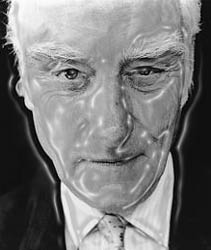
(CNN) -- Francis Crick, who along with James Watson discovered the double-helical structure of the DNA molecule, died Wednesday of colon cancer. He was 88. Crick and Watson, along with colleague Maurice Wilkins, were awarded the 1962 Nobel Prize in Medicine for their ground-breaking work, which many experts hailed as one of the most important scientific discoveries of the last century. DNA, sometimes called the blueprint of life, is the bio-agent responsible for heredity, or the passing of traits from parent to child. The discovery in 1953 of its double-helical structure gave birth to the fields of genetic engineering and the biotechnology industry. When Crick and Watson were scientists at Cambridge University in England in the early 1950's, researchers knew that the nuclei of living cells contained a biochemical called DNA, or deoxyribonucleic acid, but little was known of its function or structure. The two men were convinced that DNA was the key to understanding the mechanics of heredity, but no one could figure out how it worked. Building on the work of fellow scientist Rosalind Franklin, and using a technique called x-ray diffraction, Crick and Watson showed that the DNA molecule is shaped like a spiral staircase. Four different chemicals make up the "steps" in the helix and repeat in various sequences, forming a code. Stretches of the code, in turn, form genes, which carry the blueprints for proteins. Known as the "workhorses" of the cell, proteins carry out most of the functions of a living system.
Picked by Editer42.